We recycle for you
Family-run business
Aim for 0% to landfill
Logo
5 September 2025 |

A business owner’s guide to commercial bin compliance

Got a question?

"*" indicates required fields

This field is for validation purposes and should be left unchanged.

Whats on this page:

If you run a business in the UK, even from home, you’re legally responsible for how you handle waste. Using the wrong bins or failing to work with a licensed waste management partner could lead to fines and damage to your reputation. Staying compliant with commercial waste regulations is all about knowing what bins you need – let’s get into it.

What’s the difference between commercial bins and domestic bins?

From size to durability, there are a couple of main differences between commercial bins and household wheelie bins.

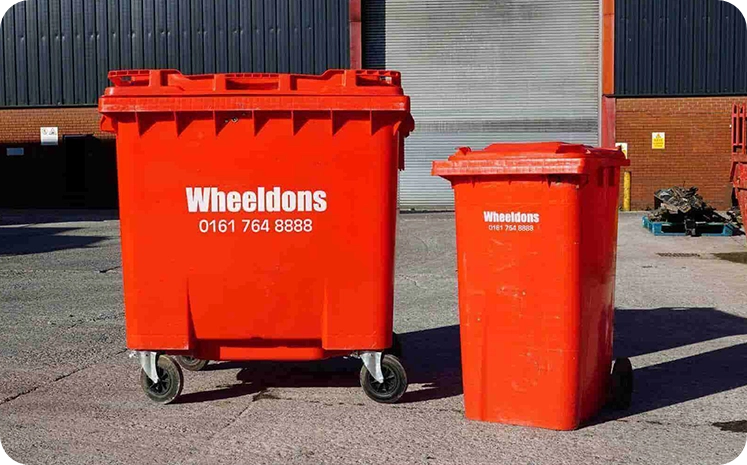
  • Commercial bins can get much larger: The standard home wheelie bin in the UK can hold around 140L of waste (3-4 bin bags). Commercial bins can reach up to 1100L – equivalent to around 18 bin bags.
  • Commercial bins come with more features: Commercial bins are more robust than domestic wheelie bins and often include lockable lids, labelled compartments, and specialist liners to keep waste secure and separated.

Did you know? Using domestic bins for business waste is illegal, even if you run your business from home.

What are your commercial bin and business waste responsibilities?

As a business owner, you have a legal duty of care for the waste you produce. That means you’re responsible from the moment the waste is created until it’s correctly disposed of.

Under the Environmental Protection Act 1990 and Waste (England and Wales) Regulations 2011, you must:

Minimise waste

  • Follow the waste hierarchy: prevent, reuse, recycle, recover, then dispose as a last resort.

Store waste safely and securely

  • Use the appropriate bins with lids and labels.
  • Prevent leakage, pests, or public access to waste.
  • Segregate different waste types properly.

Complete waste transfer notes

  • Keep a waste transfer note (WTN) for every load of waste removed.
  • Include details about the waste type, quantity, date, and carrier.
  • Keep records for at least two years.

Handle hazardous and confidential waste with extra care

  • If your business generates materials like chemicals or personal data, you must follow stricter regulations for storage, handling, and disposal.

Need help staying compliant with your commercial waste? Wheeldon Brothers is a family-run, eco-conscious waste partner helping Greater Manchester businesses reduce their impact and avoid landfill. Book your free audit or speak to our friendly team to get started.

What counts as business waste?

Any waste created from commercial activity is business waste, even if you work from home. Examples of commercial waste include:

General waste

Non-recyclable materials such as:

  • Mixed plastics
  • Soiled paper
  • Tissues and hygiene products
  • Certain packaging

Dry Mixed Recycling (DMR)

Easily recyclable items, such as:

  • Paper and cardboard
  • Plastic bottles and containers
  • Aluminium cans and tins

Food waste

  • Vegetable peelings
  • Leftover food
  • Out-of-date items

Food businesses should consider using a separate food waste bin for composting.

Glass waste

  • Bottles and jars
  • Drinkware and food containers

Should be separated and stored in glass-only bins to prevent contamination and injury.

Hazardous waste

  • Paints, oils, chemicals
  • Batteries and WEEE (Waste Electrical and Electronic Equipment)
  • Sharps and clinical waste

Confidential waste

  • Confidential waste like documents containing personal or sensitive business data must be shredded and disposed of via a secure, certified process.

How to make a commercial waste management plan

Creating a waste management plan for your commercial bins is the best way to make sure you stay compliant and reduce your disposal costs. Here’s how to build one step by step:

  1. Understand what waste you haveStart by identifying the different types of waste your business produces, such as general waste, recyclables, food waste, or hazardous materials. Once you know what you’re dealing with, estimate how much waste is generated on a weekly or monthly basis. This will help you choose the right bin sizes, collection frequency, and more.
  2. Choose the right commercial binsOnce you’ve identified your waste types and volumes, choose the right bin sizes and types for each waste stream. For example, you may need separate commercial bins for food waste, dry mixed recycling, or glass. It’s also important to consider practical factors like the available space on-site, weight limits for manual handling, and how easily waste collectors can access the bins for scheduled pickups.
  3. Set collection schedulesFigure out how often your bins will need to be emptied based on your estimated waste volume. Regular collection will help prevent your bins from overflowing (which can become a health hazard), and the right schedule will keep your site clean and compliant.
  4. Partner with a licensed waste providerWork with a waste management company that is fully licensed to handle commercial waste. Look for a provider that is transparent about pricing, offers reliable and regular collections, and can support you with waste audits and compliance paperwork.
  5. Train your teamMake sure your team knows how to separate and dispose of waste correctly. Simple training and clear instructions go a long way in preventing mistakes. Use easy-to-understand signage on bins and in shared areas to remind staff what goes where. When everyone’s on the same page, it’s easier to stay compliant and keep waste streams clean.
  6. Keep waste transfer records up to dateThese are legal documents that prove your waste has been handled correctly. You should also review any reports or data provided by your waste partner to track performance and identify areas for improvement.
  7. Regularly review and reassessCheck your waste management plan regularly, ideally every 6 to 12 months, or sooner if your business grows or changes. Look for opportunities to reduce waste, improve recycling rates, or cut unnecessary costs.

Leave your commercial waste removal to us

At Wheeldon Brothers, we’re a family-run, eco-driven waste removal partner committed to helping Greater Manchester businesses stay compliant and reduce their impact on the planet. With over 90% of waste we collect diverted from landfill and the only Waste for Energy site in the region, we’re proud to offer a smarter, more sustainable alternative to business as usual.

From flexible commercial bin hire and regular collections to free waste audits and full compliance support, we make it simple to manage your commercial waste responsibly. Book your free audit today or speak to our friendly team for expert advice and a no-obligation quote.

Commercial bins FAQs

What are the recent commercial waste regulations?

As of March 2025, the UK introduced Simpler Recycling rules for businesses with over 10 employees, requiring all commercial premises in England to separate recyclable waste into six key streams: paper and card, plastic, metal, glass, food waste, and residual waste.

Businesses must continue to comply with the Environmental Protection Act 1990 and the Waste (England and Wales) Regulations 2011, which mandate safe storage, proper documentation, and the use of licensed waste carriers. These updates aim to increase recycling rates and reduce landfill dependency across the UK.

What are the commercial bin sizes?

Commercial bin sizes typically range from 120L to 1100L, with larger options such as front-end loaders (FELs) and roll-on roll-off (RoRo) skips available for bulk waste. The most common commercial bin sizes include:

  • 240L wheelie bin (holds 4–5 bags)
  • 360L wheelie bin (holds 5–7 bags)
  • 660L wheelie bin (holds 10–12 bags)
  • 1100L wheelie bin (holds 15–18 bags)

The bin size you need depends on the type and volume of waste your business produces and the frequency of collections.

What is a waste transfer note?

A waste transfer note (WTN) is a legal document that records the transfer of non-hazardous waste from your business to a licensed waste carrier. It includes details such as:

  • The type and quantity of waste
  • The date and time of transfer
  • The names and addresses of both parties
  • The carrier’s waste registration number

Businesses must keep copies of all WTNs for at least two years to prove legal compliance with waste regulations.

What is a registered waste carrier?

A registered waste carrier is a company or individual authorised by the Environment Agency to legally collect, transport, and dispose of commercial waste. Businesses are legally required to use only licensed carriers to avoid illegal dumping and potential fines. You can check a waste carrier’s registration status on the Environment Agency public register.

CJ Restall - Wheeldon Group

About the Author:

Author: Connor Restall

CJ is the Head of IT & Marketing at Wheeldon Group, based at the company’s headquarters. He is responsible for managing the company’s technology infrastructure and leading marketing initiatives.

Related Posts