Are you allowed to burn garden waste in the UK?
Are you allowed to burn garden waste in the UK? Yes, you can burn...
Read More
Arrange your free audit
Enter your details below and a member of our team will be in touch to discuss a free site audit.
Alternatively, call us on 0161 764 2000
"*" indicates required fields
Got a question?
"*" indicates required fields
Whats on this page:
Last updated: 29 September 2026
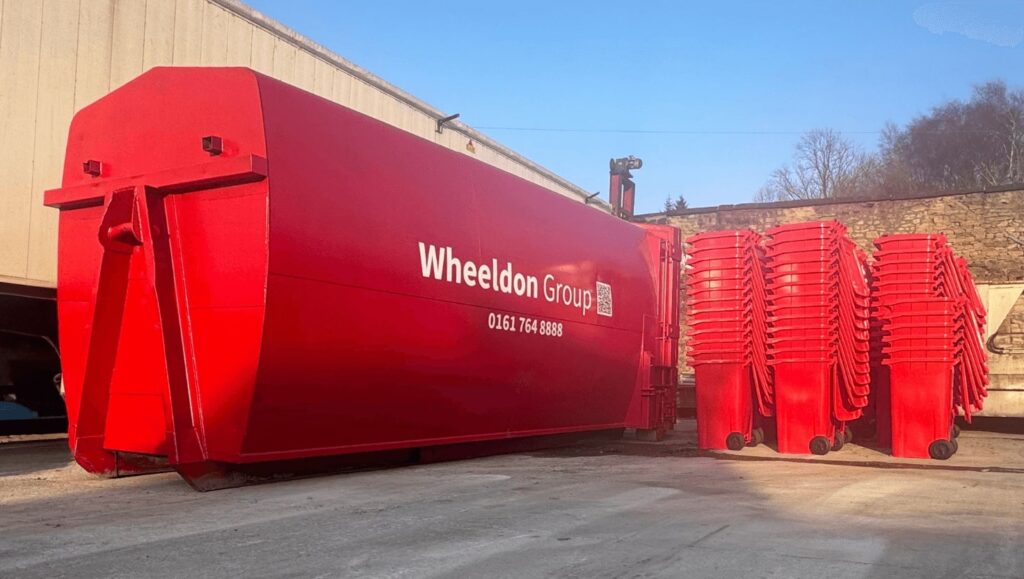
A roll-on roll-off skip (RoRo skip) is a large, open-topped waste container that’s pulled onto and off a specialist lorry, rather than lifted on chains like a standard skip. RoRos are much bigger than standard skips (we offer 20-yard and 35–40 yard sizes), and they’re built for high volumes of waste from construction sites, strip-outs, commercial clearances and industrial premises.
This guide covers how they work, which size suits which job, what can go in, and what your site needs for a smooth delivery.
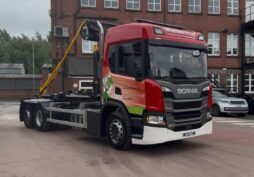
A RoRo skip is delivered on a hook-lift lorry – a vehicle with a hydraulic arm that hooks onto the front of the container and slides it on and off the back of the lorry on rollers. That’s where the name comes from: the skip rolls on for transport and rolls off onto your site.
Once it’s in place, you can load it over the sides or walk waste in through the rear door using wheelbarrows or trolleys, which is safer than lifting everything overhead.
When it’s full, we collect it and take it to be sorted, with over 90% of the waste we collect diverted from landfill through our Waste For Energy facility in Ramsbottom.
The main differences between standard and RoRo skips are size and how they’re moved.
To put the scale in context, a 20-yard RoRo holds two and a half times as much as an 8-yard builder’s skip, and a 40-yard holds five times as much.
We hire RoRo skips in two sizes: 20-yard and 35–40 yard. “Yard” here means cubic yard, so the number tells you how much the skip holds, not how long it is.
|
|||||||||||||||||||
Know which size you need? Check prices and book your skip online, or call us on 0161 764 2000, and we’ll help you choose.
A 20-yard RoRo suits jobs that have outgrown a standard skip but don’t generate enough waste to fill a 40-yard between collections. It’s also the better option when your waste includes a fair amount of heavier material, because in a larger skip you’ll reach the weight allowance well before the container is full.
A 35–40 yard RoRo is for sites producing large volumes of bulky waste – for example, full strip-outs, demolition of internal fixtures, or clearing a warehouse of pallets and packaging. If your waste is mostly light but takes up a lot of space, this is usually the most cost-effective size.
You can put most non-hazardous construction, commercial and industrial waste in a RoRo skip, including:
RoRo skips aren’t only for light waste. You can load rubble, bricks, concrete and soil, but these materials are heavy, so they’ll use up the weight allowance long before the container is full.
If most of your waste is heavy, a 20-yard RoRo or a part-filled load is usually the safer choice – get in touch and we’ll help you pick the right option.
Hazardous materials and confidential waste can’t go in a general RoRo skip, and some other items need to be checked with us before you load them.
A RoRo skip needs a clear, straight run of around 16m long and 3m wide, about 5m of overhead clearance and firm, level ground. That’s more room than a standard skip, because the hook-lift lorry has to line up behind the drop-off spot and slide the container off in a straight line. Before booking, check that your site has:
If the lorry can’t get in safely, the delivery may not go ahead, and a wasted journey charge could apply. If you’re not sure your site is suitable, call us on 0161 764 2000 before booking and we’ll talk it through.
RoRo skips are usually placed on private land. If yours would need to go on a public road, you’ll normally need a permit from your local council, and rules vary between councils across Greater Manchester.
The good news: when you book your skip with Wheeldon Brothers, we sort the permits out for you as part of your booking.
RoRo skip hire with Wheeldon Brothers starts from £812.99 for a 20-yard RoRo and from £1,010.50 for a 40-yard RoRo.
The final price depends on where your site is and how long you need it. Enter your postcode to check we cover your area and get a price. The things that can add to it are worth knowing before you book:
You can typically keep a RoRo skip for up to 28 days before the hire needs renewing. Hire periods are longer and more flexible than for standard skips, because RoRos are usually used for continuous waste exchange on construction sites.
Wheeldon Brothers is a family-run waste business that has served Greater Manchester for around 60 years, with upfront pricing and easy booking. Whether you’re clearing a construction site, managing industrial waste or planning a major refurbishment, our RoRo skip hire service keeps large-scale waste removal simple.
Call us on 0161 764 2000 or use our quick online form to book your RoRo skip.
A RoRo skip, roll-on roll-off skip, roll-off skip and RoRo container are all names for the same type of large open-top waste container. The terms are used interchangeably across the UK waste industry. RoRo skips are loaded on and off a specialist lorry using a hook system, rather than lifted by chains like a standard skip.
A RoRo skip must not be filled above its top edge, because waste needs to sit level with the sides for the container to be transported safely. If a skip is overfilled, the driver may ask for the excess waste to be removed or levelled before collection, which can delay the pickup.
A RoRo skip can be used for a house clearance, but most domestic clearances fit comfortably in a standard skip. RoRo lorries need far more space to deliver and collect than most residential streets allow, so a RoRo skip suits very large properties with private driveways or grounds that can take the container and vehicle safely.